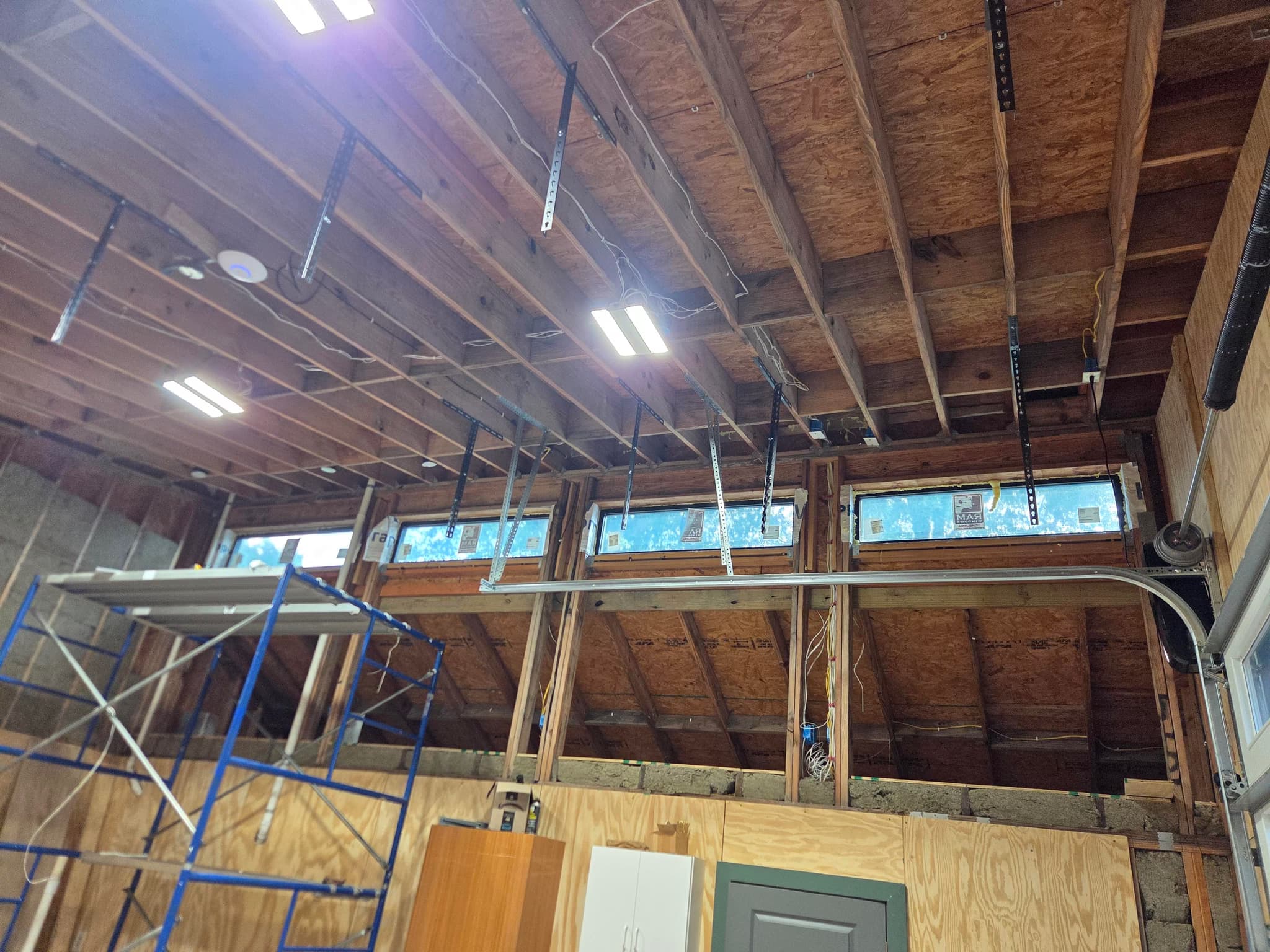
Is $3,800 to install hybrid closed and open cell spray foam insulation a fair price?
Project Details
The project involves insulating the underside of a shop's roof deck in climate zone 3A to create an unvented, conditioned space. The roof decks are OSB with standing seam metal. The homeowner is debating between a hybrid closed/open cell approach versus an open-cell only approach to prevent condensation and thermal bridging.
Quote Details
Insulate underside of roof deck for a conditioned shop space. - Apply 1-2 inches of closed cell spray foam under the decks for air sealing and moisture control - Cavity fill remaining space with open cell spray foam - Encapsulate 2X6 framing members in closed cell to mitigate thermal bridging - Total coverage area approximately 750 sqft (550 sqft of 2X12 roof and 200 sqft of 2X6 roof) - Target R-value of 35-40
You say...
Vote Distribution
These ratings are not endorsed by Quote Critic. They are submitted by other Quote Critic users like you.
More Details
Category
Insulation
Price
$3,800
Quote Date
June 15, 2026
Location
Georgia
Insulation Type
Spray foam
R Value
38
Comments
No comments yet
Sign in to share your thoughts and ask questions.
Similar Quotes
Insulate attic decking with closed cell spray foam
Install spray foam insulation on the attic decking of an old home. - 3 inches of closed cell 20lb spray foam - Application to attic decking - Covers a large attic space with 4 gables and a 17ft peak
Install 2 inch closed cell spray foam in shop walls and roof
This quote recommends installing closed cell spray foam on all exterior walls and the roof of the shop. - Insulation Type: Closed cell spray foam - Wall Thickness: 2 inches - Roof Thickness: 2 inches
Spray foam attic with open-cell insulation
This option includes the removal of existing blown-in insulation and the application of open-cell spray foam insulation to the attic roof line. This type of foam is considered standard in the South due to its performance in hot-humid climates. It offers several benefits over closed-cell foam, including: - Safer Moisture Behavior: Allows the roof deck to dry inward and reveals roof leaks. - Avoids Structural Stress: Flexible and low-density, it does not shrink or pull on roof decking. - Better for Retrofit Fit & Air Sealing: Expands significantly (approx. 100x) to fill gaps completely. - Easier to Modify Later: Soft and easy to remove for future work. - More Cost-Effective: Achieves excellent thermal and air-sealing performance for significantly less money.